
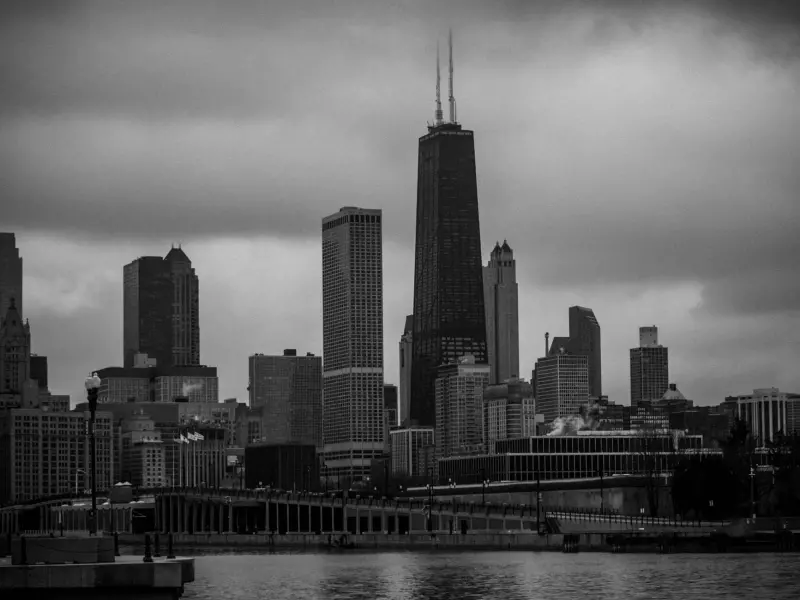
When you hear the name 'First Chicago Insurance,' what springs to mind? For me, it immediately conjures images of a bygone era, a time when Chicago was truly forging its identity as a financial powerhouse and industrial giant. It’s a name that suggests a foundational role, something deeply rooted in the city's very fabric. As I’ve looked into it, I’ve found that understanding First Chicago Insurance isn't just about a single company; it’s about understanding a significant chapter in American commerce and how essential insurance was to that growth.
The Genesis of a Financial Institution in a Burgeoning Metropolis
Chicago, back in the day, wasn't just growing; it was exploding. After the Great Fire of 1871, which, let's be honest, leveled much of the city, there was an unbelievable need for capital, for rebuilding, and crucially, for risk mitigation. You can’t rebuild a city on hopes and dreams alone; you need assurances. And that’s where an entity like First Chicago Insurance would have stepped in. I mean, think about it: banks lend money, but insurance companies protect the assets that money builds. They’re two sides of the same coin, aren't they?
My take is that First Chicago Insurance, whether as a standalone entity or, more likely, a vital arm of the broader First Chicago banking enterprise, must've been established to meet these very specific, urgent demands. It wasn't just about writing policies; it was about providing the confidence for businesses to invest, for families to reconstruct their homes, and for the city’s commerce to really pick up speed again. They weren’t just insuring against loss; they were insuring the future, plain and simple.
What They Might Have Insured: A Look at Early Offerings
So, what kind of coverage would an institution like this have focused on? Well, I reckon it’s a pretty safe bet to assume a diverse portfolio, reflecting the industrial and commercial heartbeat of Chicago. It wasn’t all just about personal lines, though those would have been important too. Consider:
- Commercial Property Insurance: After the fire, this would have been absolutely non-negotiable for any business setting up shop. Protecting factories, warehouses, and storefronts was paramount.
- Marine Insurance: Chicago's a port city, right on Lake Michigan, a crucial hub for shipping grain and other goods. Insuring cargo and vessels would have been a significant niche. I bet they had specialists just for that.
- Casualty Insurance: As industries boomed, so did the risks of workplace accidents. This would've encompassed everything from workers' compensation (once legislated) to general liability for businesses operating machinery and employing large workforces.
- Life Insurance: A stable workforce needs security. Providing life insurance policies would have been key for attracting and retaining talent, offering peace of mind to families in a rapidly industrializing, sometimes perilous, environment.
- Surety Bonds: For a city always building new infrastructure, surety bonds for construction projects would have been a regular part of their business.
It’s not hard to see why a comprehensive suite of products would have been necessary. They weren't just selling a product; they were selling stability in a wildly dynamic economy.
Navigating the Evolving Landscape: Challenges and Adaptations
The insurance world, I’ve learned, never really stands still. It's constantly reacting to new risks, new technologies, and shifts in societal norms. For First Chicago Insurance, operating through the late 19th and most of the 20th century, the challenges must have been immense. Think about the economic upheavals: the boom years of the 1920s, the crushing blow of the Great Depression, then the post-war industrial expansion. Each period would've demanded different strategies.
"The true measure of an insurance company isn't just its size, but its resilience in the face of economic storms and its ability to innovate for tomorrow's risks." That's a quote I heard once, and it feels particularly apt here.
I imagine they had to constantly refine their underwriting models. New construction techniques, emerging technologies (automobiles, aviation!), changes in public health – all of these would have required a nimble approach. They couldn't just keep doing things the old way; they had to adapt, and fast. The regulatory environment changed too, with more state and federal oversight emerging over time. Compliance alone would have been a full-time job for a team.
The Integrated Model: Insurance within a Banking Empire
The name 'First Chicago' itself strongly suggests a connection, if not outright ownership, by First Chicago Corporation, which was a banking giant. This integration, in my opinion, offers a fascinating insight into how financial services evolved. Having an insurance arm alongside banking services would have provided a powerful synergy.
- Cross-Selling Opportunities: Banks could refer their clients (businesses, individuals) to the insurance division, and vice-versa. It's a classic example of financial one-stop shopping.
- Diversification of Risk: For the parent company, having both banking and insurance operations would have diversified their income streams and spread risk across different financial sectors.
- Capital Deployment: Insurance premiums generate significant capital. This capital, prudently managed, could have been invested, potentially even back into the bank's lending activities, creating a powerful internal financial ecosystem.
It really makes you wonder how many businesses in Chicago might have banked with First Chicago and then also insured their assets, their employees, and their future through First Chicago Insurance. It paints a picture of a truly integrated financial service provider, a model that's actually quite common today, but perhaps was ahead of its time for many regional institutions.
Its Enduring Imprint, Even if Names Change
Even if the specific entity 'First Chicago Insurance' no longer operates under that exact banner today – perhaps it was merged, acquired, or its functions absorbed into larger corporate structures, much like the First Chicago Bank itself eventually became part of Chase – its historical presence is still significant. What it represents is the fundamental role that specialized financial services play in urban and economic development. I think about all the buildings still standing in Chicago, the businesses that thrived for decades, the families who built lives there; so much of that journey would have been underpinned by the security and stability offered by institutions like First Chicago Insurance.
It wasn't just a company; it was a participant in the growth story of one of America's most dynamic cities. It helped people and businesses recover, it encouraged investment by mitigating fear, and it contributed to the complex financial infrastructure that allows modern economies to function. And that, to me, is a pretty cool legacy to think about.